Illusions and visual special effects – explanations and tutorials

Optical Illusions

Archives Posts

The Twisted Stairs (version 2)

January 15th, 2010 by david

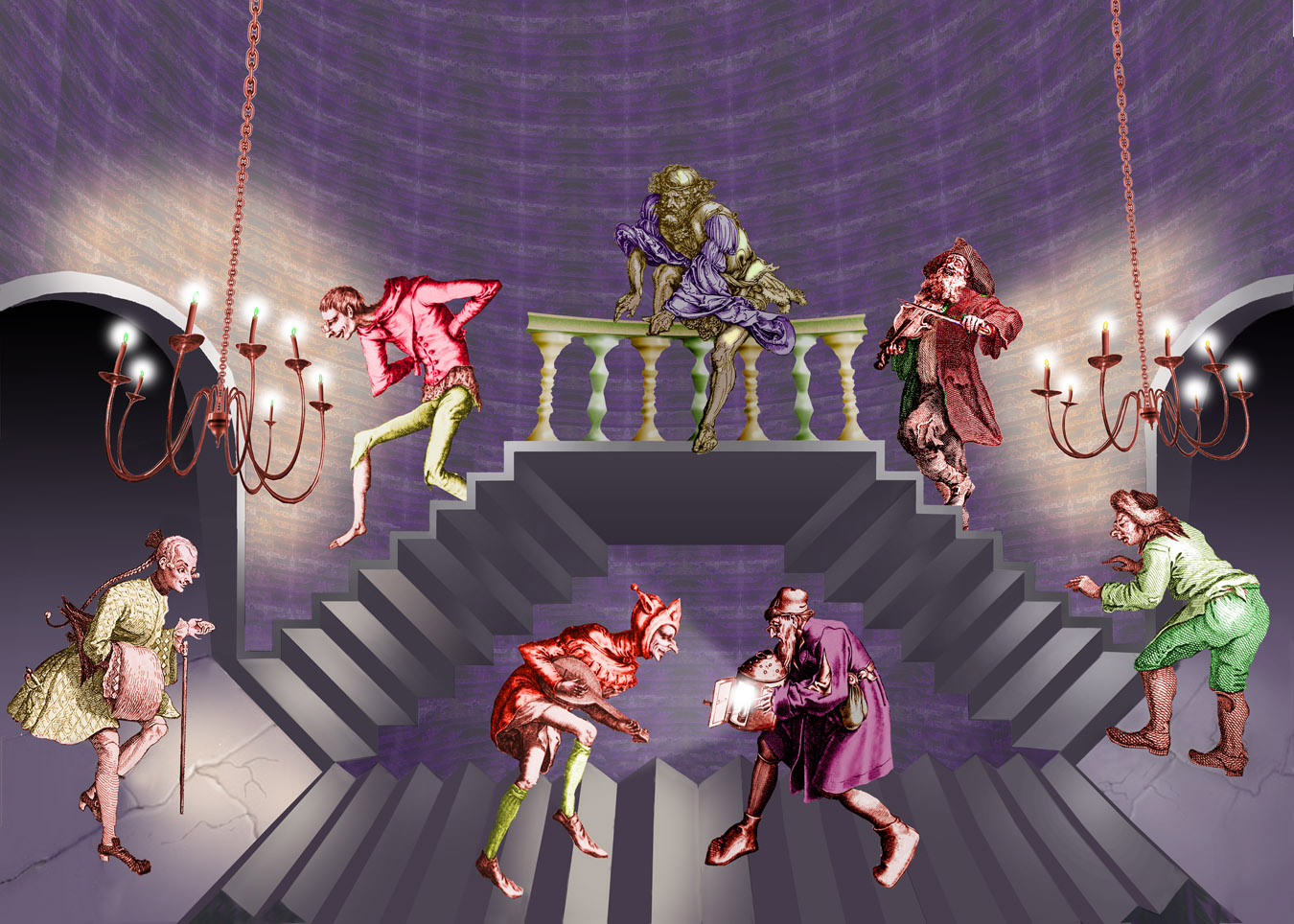
The Twisted Stairs - version 2

I’ve been wanting to do a new version of my earlier post of The Twisted Stairs.  That’s partly because the way I placed the figures in the original posting, they got in a bit the way of seeing the twist in the lateral flights of stairs. I reckon you can see the twist effect better now, as they transform from stairs seen from below (at the top by the balcony), to stairs seen from above (down at floor level). I wanted to see if I could get it right, because this is an impossible stair effect that maestro M.C.Escher never used. Sometimes his staircases as a whole can be seen either as from above or from below, but they don’t twist from one viewpoint to the other half way up. As I mentioned in the earlier post, I reckon that’s because the twist effect depends on fudging the perspective, and Escher didn’t do fudge. His perspective is almost always miraculously lucid.

Another reason for a new version is that I wanted to produce a high resolution version, suitable for giant 35 x 23 inch posters. As ever, you are welcome to use downloads of the image here for any private purposes, but if you wanted to think about buying a framed print, or giant poster, here’s where to take a look.

There are more technical details on the original post. I borrowed the figures for this new version from Durer, Pieter Brueghel the elder, and Hogarth.

Archives Posts

80 Illusions Poster

December 9th, 2009 by david

80 Illusions poster

You’re welcome to download and use for private purposes any of the imagery on the site, except for a very few pictures where I indicate that third party copyright might apply. But if you’d like a giant, 35 x 23 inch poster, full of illusions, you can buy it (along with loads of illusions on bags, T-shirts etc.) from www.Cafepress.co.uk/optoct. I was delighted when I saw the quality of the poster. Each of the illusions is identified with a discreet caption line, so that you’d be able to follow them up on this or other sites.  And of course, lots of these illusions are brand new versions, often with an extra twist of some kind.

Illusions make brilliant gifts.

You’ll also find a poster of the whole of my optical illusion cartoon story.  If you’d like to preview that, read on.

Read the rest of this entry »

Archives Posts

Bad Day in the Art Museum

March 28th, 2009 by david

Art gallery

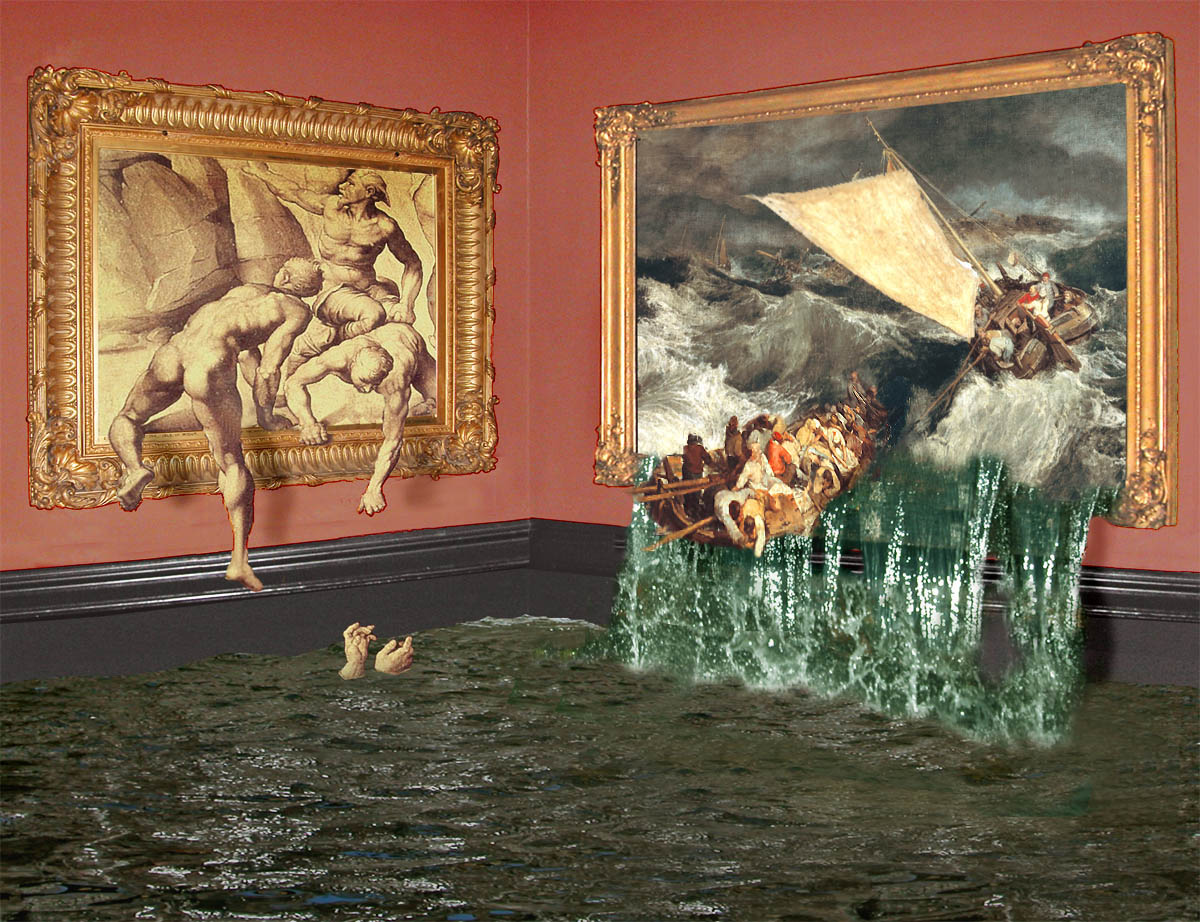
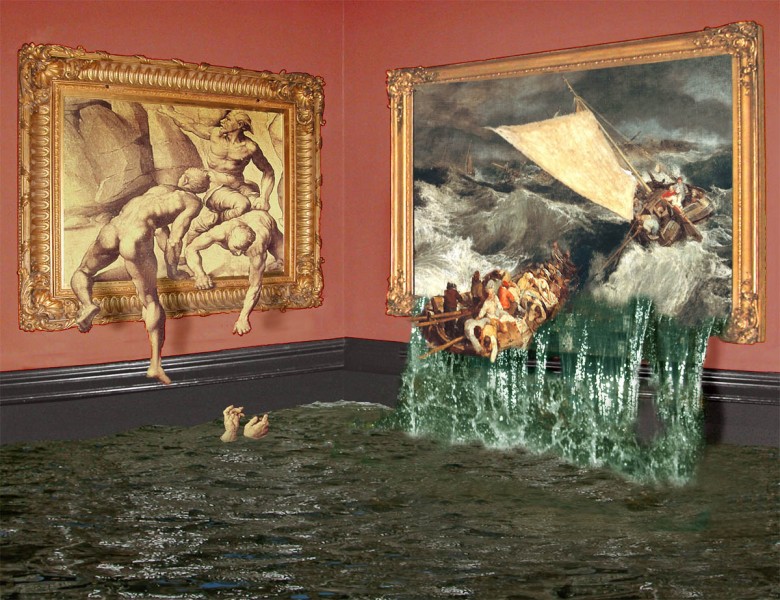
Interesting things can happen when you have pictures within pictures. Not so much, for example, with an everyday photo of an art gallery, if all the pictures are behaving well and staying in their frames. But sometimes it’s not possible to tell when the picture of a picture ends, and the picture of the real world begins. Here’s an example, in which the paintings in an art gallery are definitely not behaving how paintings should.

M.C.Escher did some brilliant pictures in which the boundary between the real world and the graphic world breaks down in the same way. The most famous is his print Drawing Hands of 1948, but you’ll find lots of others. Amongst contemporary artists, Rob Gonsalves has done some really clever paintings, such as Unfinished Puzzle. It’s the kind of issue that interested Picasso and Braque too, in their cubist paintings. In one by Braque you can see a cubist palette hanging on an illusionistic nail.

Here’s another famous example, a painting from a bit over a century ago, by Pere Borrell del Caso.  It’s called Escaping Criticism. I guess the artist felt hard done by at the hands of critics, and did this as a demonstration of virtuosity.  (I believe the original painting is in the Banco de Espana Madrid   –  Spain’s national bank).
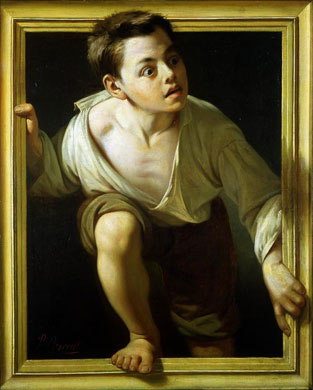
Escaping criticism by Borrell del Caso


The guys climbing back into a painting in my image are borrowed from a copy of Michelangelo’s lost study for the Battle of Cascino. The shipwreck is from a 200 year old painting by English Romantic painter J.M.W.Turner in the art museum Tate Britain in London, of a bad day in the English Channel.
Archives Posts

Scrambled space

March 6th, 2009 by david

sqtemp1

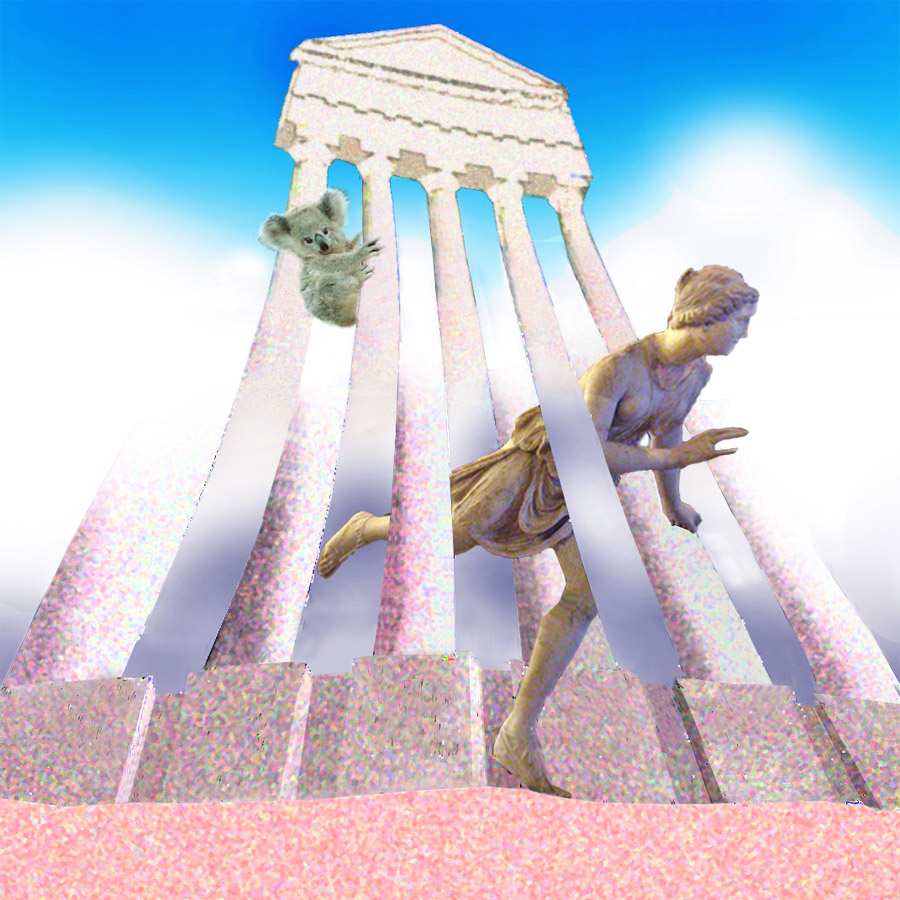
One of surrealist painter Rene Magritte’s cleverest paintings, Carte Blanche, is of a rider in a wood, but all mixed up with the trees. I had a shot at playing with the same effects in the earlier Halloween post.  This time, I’ve tweaked up the complication with an impossible figure/ground reversal half-way up the columns, (in the manner of the impossible fork illusion – see our earlier post Outlines, objects and apertures).

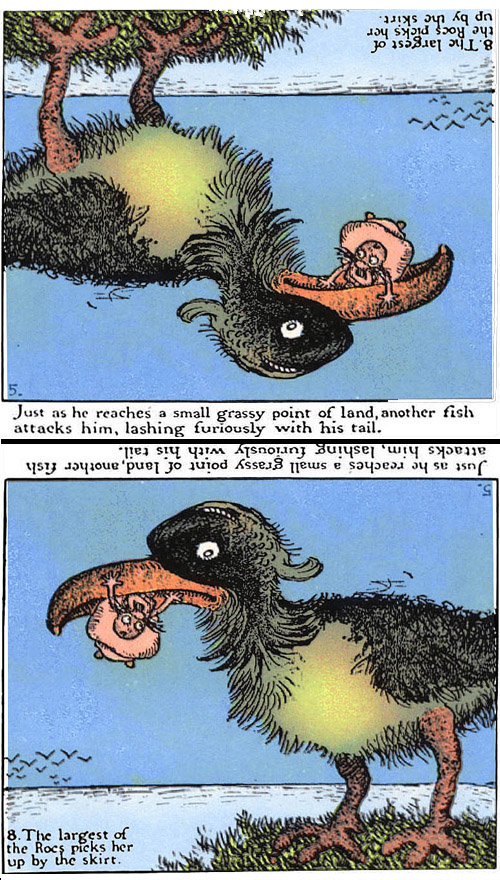
A while back I tried out a similar figure/ground scenewarp in one of the picture pairs for an optical illusion cartoon story, Opticaloctopus.

Archives Posts

The twisted castle

January 17th, 2009 by david


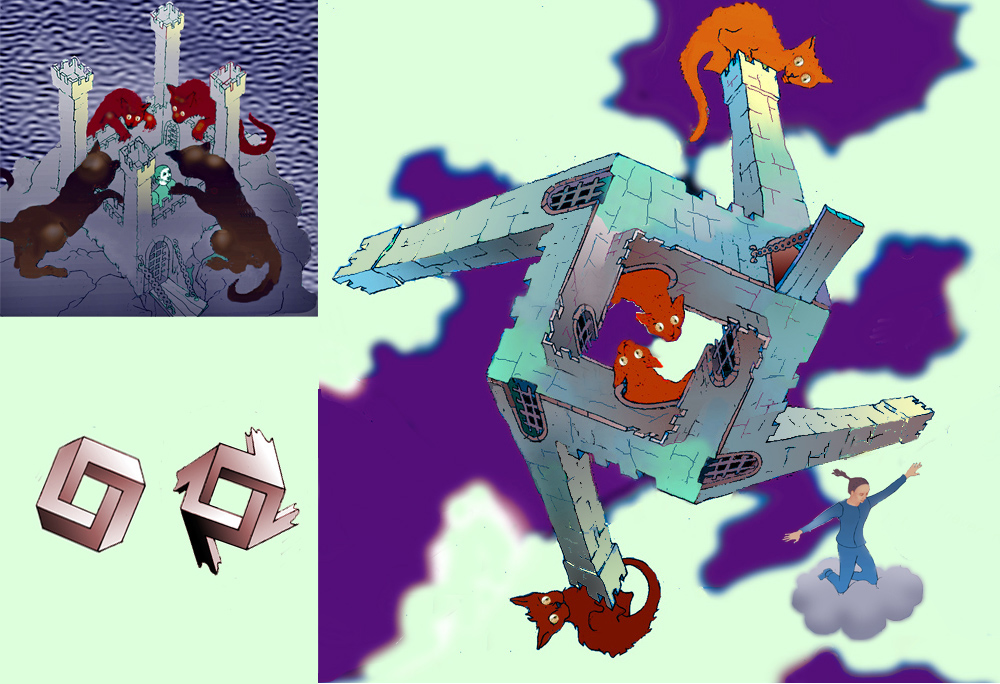
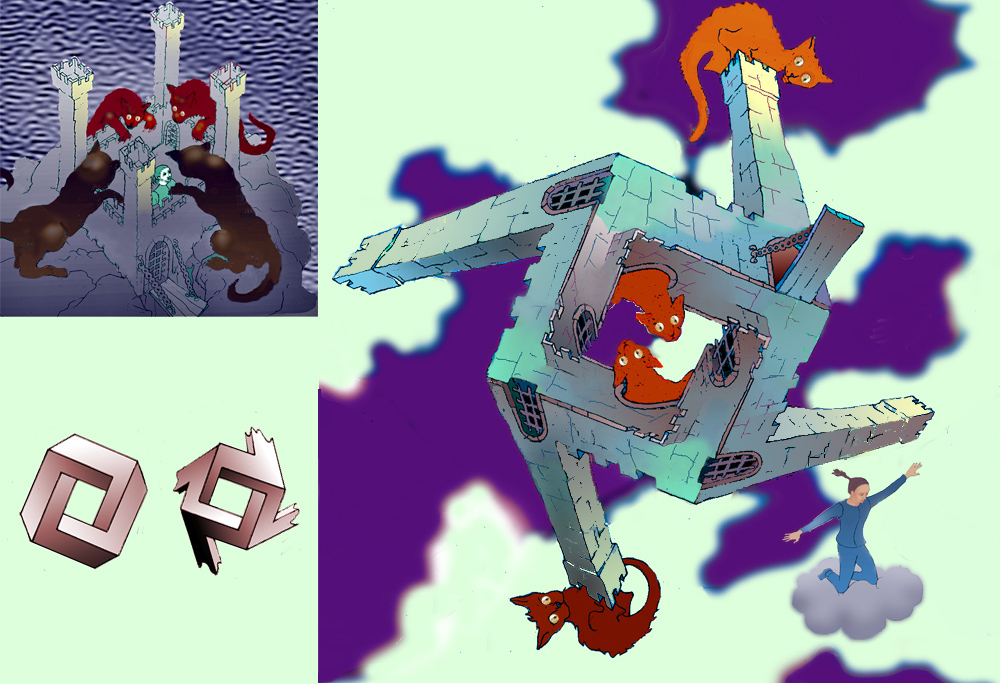
This is another transformation based on one in my illusion cartoon story.  I did it to see whether I could devise an adventure, set in graphic world, with transformations that are forbidden in our everyday world as the events that take the story forward.  Most of the transformations, like this one, offer an escape route for a character being pursued.  Not very imaginative.  I did also have animation in mind, and working out this particular 3D morph would be no joke.  It’s based on the four sided version of the famous impossible triangle, with added extensions for the towers, as above.  For the classic impossible tribar, see my earlier post on Escher’s Waterfall Explained.  For impossible figures with four sides and more, check out Gershon Elber’s site.   

Archives Posts

Convex/concave spacewarp

November 8th, 2008 by david

convex concave space illusion

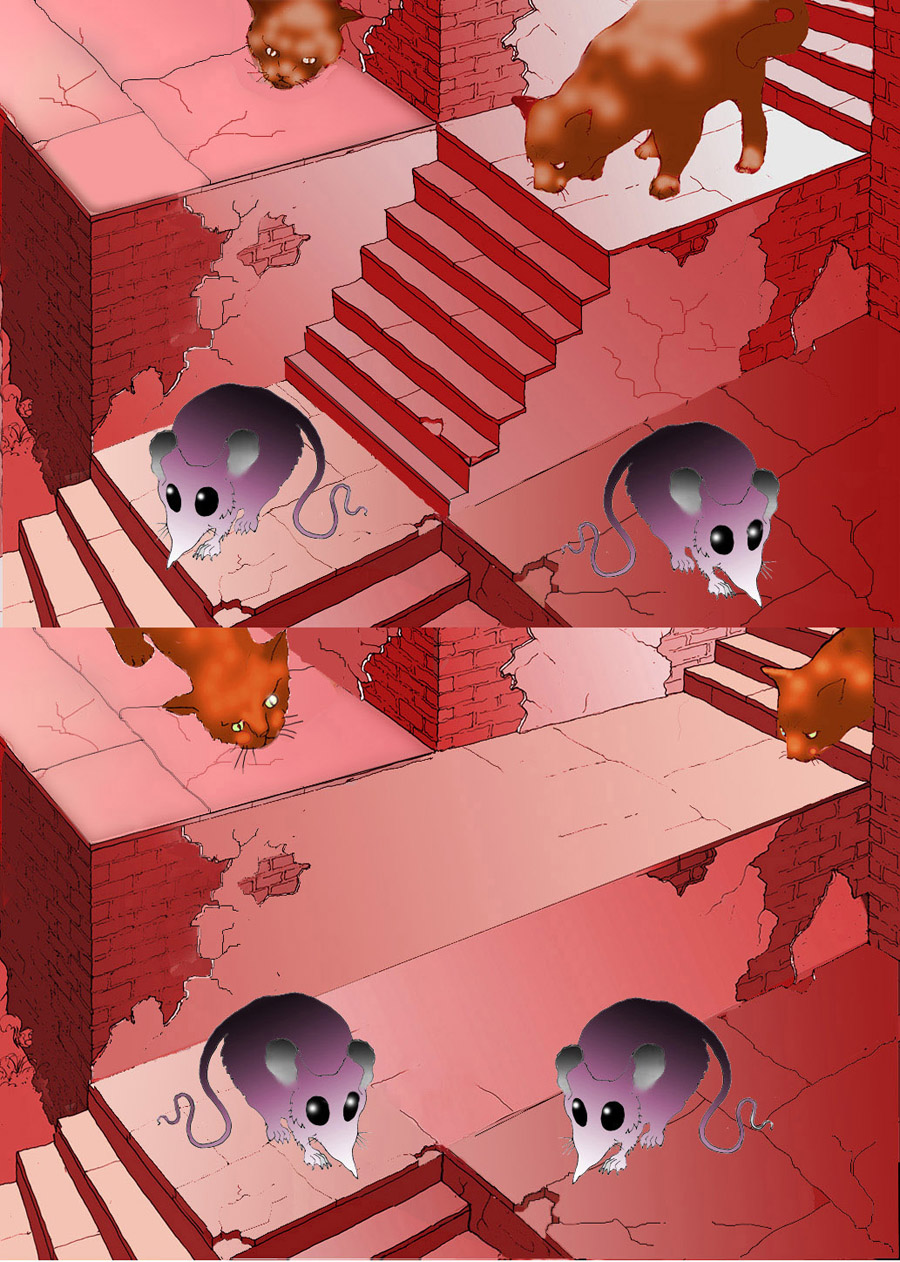
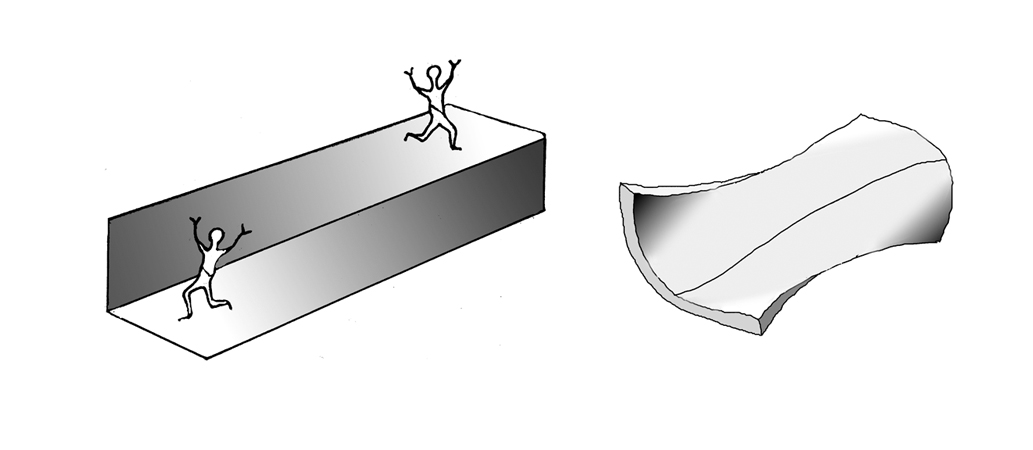
This is about the simplest of all spatial transformations.  In the top picture, the mice are at risk from the cats.  In the bottom picture, the stairs have vanished, and as the eye travels along the picture from the left, a concave terrace turns into a convex, step shape.  There’s now a protective inside/out space-warp between the cats and the mice.  I adapted the scene from one I devised for my optical illusion cartoon story.  If you wanted to experiment with scenes based on this transformation, the essential scheme is as to the left here. Note that there must be no tonal contrast across the middle line, just in the middle of the image.

Topologically, I suppose the shape is just a saddle shape, as to the right, so it could exist as a rectangular, 3 dimensional shape, but it would be such an improbable one, and seen from such an unlikely angle, that it looks like an illusion.  For a fiendishly clever picture on the theme of inside out transformations, see M.C.Escher’s print Convex/Concave.  (Try that title in Google images, or find it on the official Escher website).

Archives Posts

Outlines, objects and apertures

November 3rd, 2008 by david

Impossible shape illusion


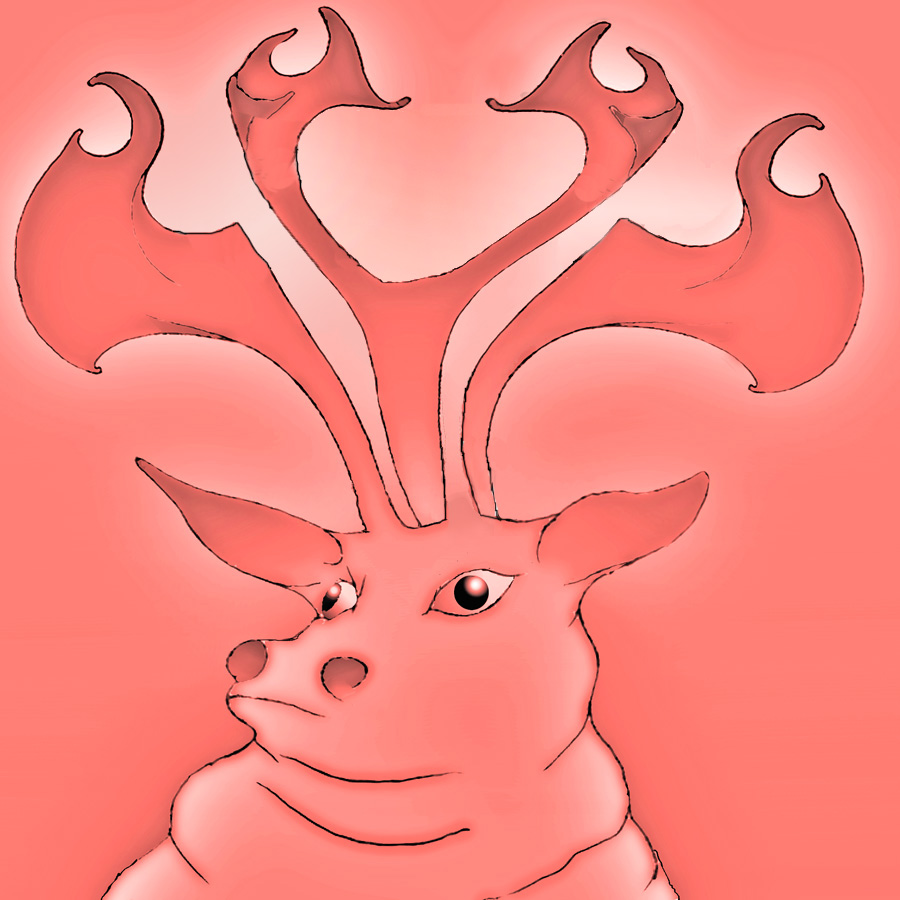
This stag may look OK at first glance (well, you know, sort of…), but hang on, has he got three antlers, as at the top of the picture, or only two, as down by his ears?  Following on from the last post, it’s another example of what happens when apertures or gaps in the visual scene – like the segment of starry night in the last post – become objects. But with the stag it’s even weirder, because the middle antler, for example, starts out at the top OK, but by the time it gets down to the stag’s head, it’s become background.  Want to know more?  Read on!

  Read the rest of this entry »

Archives Posts

Halloween magic

October 31st, 2008 by david

Occlusion illusion

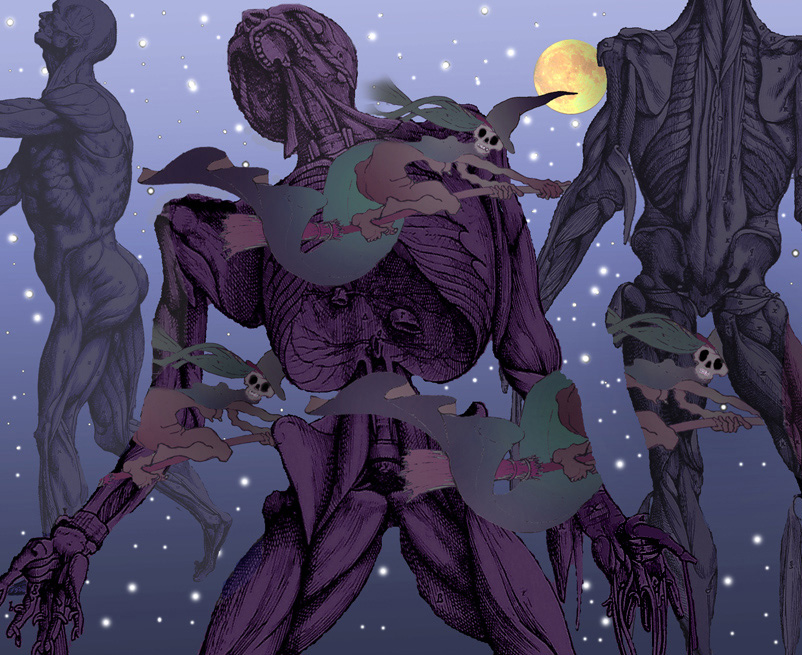
Here’s a scene for Halloween.  In our everyday view of the world, the orderly way in which one thing blocks our view of another is something we can depend on to orientate ourselves in the world around us.  These witches are breaking the rules.  The lower ones appear and disappear at puzzling locations, and the witch lower right even vanishes behind a segment of starry sky.  It’s as if the segment of sky had become an object in the visual field, instead of an aperture – an oddly weird effect, for me.

I got the idea from a wonderful painting by Rene Magritte, Carte Blanche.  If you go to for that link, you’ll just need to scroll down a couple of pictures – you’re looking for a painting of a lady on a horse in a wood.

Oh, and I borrowed the musclemen from the 450 year old illustrations to the pioneering anatomical studies of Andreas Vesalius. 

Archives Posts

A New(?) Ever Receding Staircase

October 23rd, 2008 by david

More on staircases. Here’s a picture of penguins on a stripped down version of a never-ending staircase, like the one in M.C.Escher’s famous print Ascending Descending. (Or just put the name Escher and that title into Google images to get stacks of versions). In my version, it’s penguins who will go on climbing the staircase forever.


Here’s how this kind of illusion works. In the middle picture below, the upper left bar seems to butt up to the upper right bar, and join it, even though the result is impossible for a 3-D configuration. On the left, it doesn’t quite butt up, and so appears, as in reality, both nearer to us and higher. If you are good at viewing 3D picture pairs without a viewer, you’ll find the centre and left images can be fused to show the configuration in 3D. (For guides to how to do that, see: http://www.usm.maine.edu/~rhodes/0Help/StereoView.html or
http://home.att.net/~nightscapes/photos/stereo/stereoViewing.html.

.

To see a new (I think) variant on this classic stair, one on which the penguins will recede forever, with an animation, read on:

Read the rest of this entry »

Archives Posts

Twisted stairs

October 18th, 2008 by david


Here are some crazy stairs.  Look at the stairs leading up to the balcony, and at the foot of the stairs you’re looking down on them from above, whilst up by the balcony you’re looking up at them from below. Nothing wrong with that, in a perspective view, but these steps are in a parallel projection, which forbids it. As a result, the side of the steps that’s furthest from us, next to the outer wall down at ground level, has somehow twisted to become the side that’s nearest to the viewer up by the balcony, and vice versa.  There’s a different twist to the stairs at the foot of the image.  On those, if you start, say, on the right, you’ll find that the flat step surfaces have become vertical risers once you’ve passed the half way mark.


Read the rest of this entry »

« Previous Entries